Meta Description: Experience the felicitousness and nurturing of the white colour peacock, a magnificent pet. Get to know its background, characteristics, and the proper maintenance of the same in your garden or home.
- Introduction: The White Colour Peacock – A Rare Beauty
- What is a White Colour Peacock?
- Origin and Rarity of the White Colour Peacock
- Key Features of White Colour Peacocks
- Caring for a White Colour Peacock
- Why Choose a White Colour Peacock?
- Conclusion: The White Colour Peacock – A Perfect Pet for Exotic Enthusiasts
- FAQ: Common Questions About White Colour Peacocks
Introduction: The White Colour Peacock – A Rare Beauty
Do you want to bring something special and splendid to your garden or house? The pure whiteness of peacock having the gorgeous snow-white plumes and a graceful look is bound to attract. This rare kind is a new striking visual experience as opposed to the traditional colorful peacock
. A bird lover or a person who wants to add something exotic to his or her backyard will find the grace and beauty of the white colour peacock to be a centre-piece. But what do you do with this peculiar bird? What is special about it among other peafowls?
In the present paper, we shall discuss the interesting world of white colour peacock and give the tips necessary to take care of it. You are going to find out everything about this great animal? Let’s dive in!

What is a White Colour Peacock?
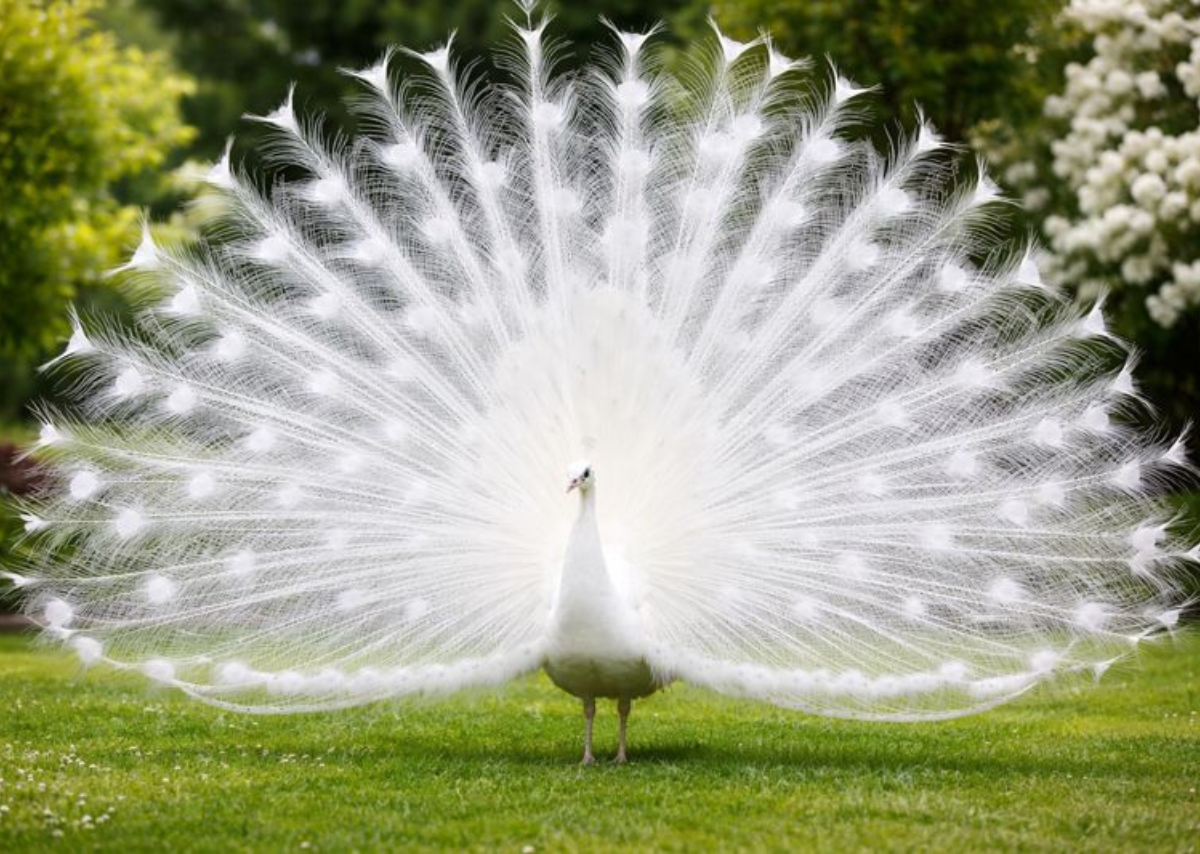
The white colour peacock, sometimes called the leucistic peafowl is a rare form of the Indian Peafowl ( Pavo cristatus ). They have much in common with their color cousins, but the white peacock is of a beautiful all-white plumage. They are not albinos like the albino birds but rather they are normally colored by their eye pigment and their white feathers still convey an iridescent glow when subjected to sunlight, thus they almost seem to be magic.
Although not a distinct species, the white peacock was produced as a consequence of genetic mutations, thus, it is incapable of forming the normal blue and green pigments. The impressive look of this bird has brought it to be a valuable pet and ornamental bird in the hands of the people who keep it as their pets or collectors of this bird.
Origin and Rarity of the White Colour Peacock
The breeding of white colour peacocks mainly involves the selective breeding. These birds are native to the Indian subcontinent and the descendants of the Indian Peafowl. The leucistic form is however found in the wild with the majority of the white peafowls being bred in captivity.
The act of selective breeding will then see to it that this color variant that is rare will be expanded and in most cases it is exhibited in zoos, reserves, and in the collections of individuals who possess birds. White peacocks are also not very common and thus seen as a symbol of status and as an exotic animal to add to gardens and estates.

Key Features of White Colour Peacocks
Appearance
The all-white peacock which is the most noticeable characteristic of the white colour. Their plumes still bear the composition of the common peacocks, the well known fan-shaped tail, but of blue and green they have no brightness. Rather, they are proud of a pearly white body and soft-iridescent tail. The tails of the males may be as long as 6 feet and when spread out, it is a sight to marvel at.
Size and Shape
White colour peacocks become equally as big as the Indian Peafowl. Peacocks are male, and 4-5 feet tall, although the female is, of course, smaller. Tail feathers or train are long and flowing particularly in males. They are long, elegant and round bodied, and this makes them stand out in any environment.
Behavior
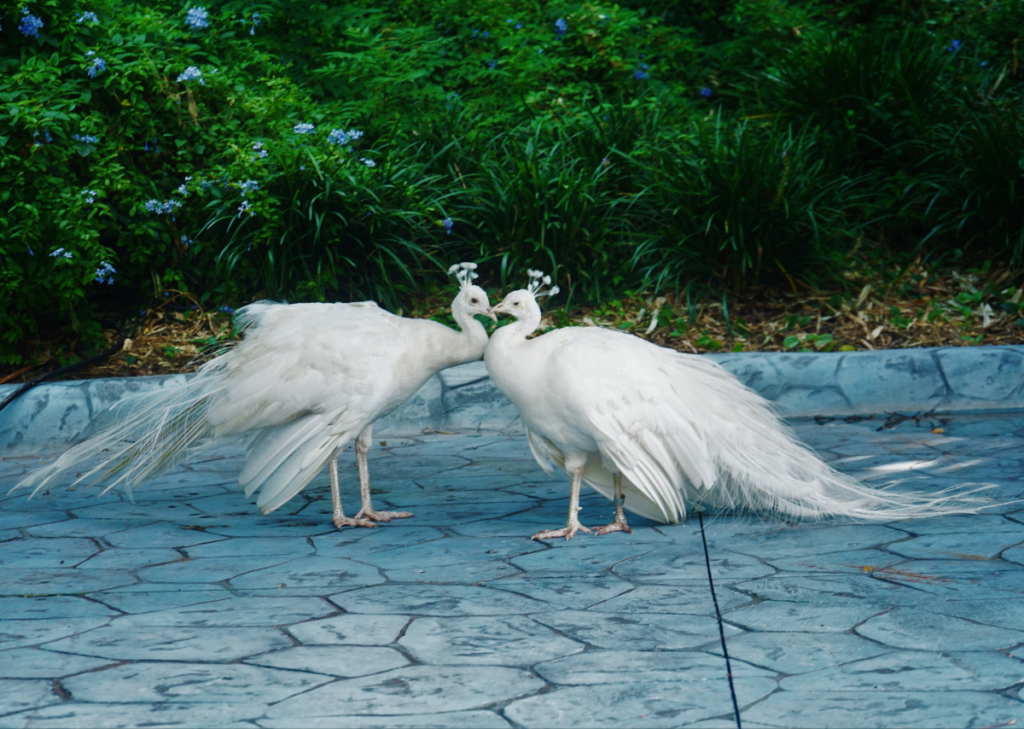
Similar to other peacocks, the white one is famous in its beautiful courtship displays. Male peacocks spread their tails and use them to showcase themselves to the female sex. They have also loud and distinctive calls. It is not only a spectacle but also a ceremony in their mating.
Caring for a White Colour Peacock
Habitat Needs
Peacocks of the white colour need a large safe habitat. One bird requires at least 150 square feet of space, though the larger the size of an area, the better. The enclosure provided to them should be in good condition to give them both sunlight and shade and a secure area to roost and take a rest. The fence needs to be enclosed well to keep the peacocks inside since they have a tendency of flying short distances.
In winter, the peacock must have a warm shelter. They are also very sensitive to extreme temperatures and it is extremely important that they be given a safe and insulated area to stay in and maintain their health.
Diet and Nutrition
Peacocks also eat grains, seeds, fruits and small insects in the wild. This eating habit should also be replicated even in captivity by giving them good bird food. They also consume fresh fruits and vegetables like apples, banana, corn and greens. There should be adequate supply of fresh water.
Interaction and Socializing
Peacocks are social birds and in most cases are good in groups but males may grow to be territorial during mating seasons. In keeping one peacock, expect times when they can require to be left alone. They may not be as loving as certain domestic animals but when they grow up in a secure and peaceful atmosphere they are able to develop attachment to their owners.
Why Choose a White Colour Peacock?
Aesthetic Appeal
The white colour peacock is not only a pet, but an artwork. Its distinctive color presentation is a plus to any garden giving it a touch of sophistication as well as beauty hence it is an ideal decorative bird to people who want to classify themselves with elegance.
Low Maintenance
The white colour peacock is a low-maintenance pet compared to other exotic pets. It needs room, meals and protection, although it does not need to be groomed or attended to with exquisite care. In your care they will be fine as long as they are provided with their basic needs.
Fascinating to Observe
There is endless interest in the courtship, the mode of feeding, and the general graceful motions of the white colour peacock. They are a perfect option when an individual would like to view wildlife behavior in their natural environment.

Conclusion: The White Colour Peacock – A Perfect Pet for Exotic Enthusiasts
Peacock white is a beautiful species of bird which can adorn and grace your home or garden. It is a very interesting pet with its amazing plumage and intriguing behavior. Although their care is uncomplicated, they need space, care and appropriate environment to flourish. A white colour peacock might be the right colour to buy in case you are willing to introduce some majesty in your life.
Keep in mind these magnificent birds may also live to 20 years with love and care and bring joy and wonder to your house many decades later.
FAQ: Common Questions About White Colour Peacocks
1. Are the peacocks with white colour rare?
Yes, the white colour peacocks are very rare and they are mostly kept in captivity because of their unique colouration.
2. Will other birds be kept with white colour peacocks?
Yes, they are not incompatible with other birds, but care should be taken to make sure their enclosure is so big that they do not brawl over territory.
3. The size of the area occupied by a white colour peacock?
A white colour peacock must have a minimum of 150 square feet to move freely. The more space, the better.
4. Should white colour peacocks be given special attention?
Although they are not very challenging, white colour peacocks need a large and safe habitat, a balanced diet, and shelter against excesses of weather.
5. Peacocks, what do white coloured peacocks eat?
They consume various foodstuffs, consisting of bird food, fruits, vegetables, and seeds. Fresh water has to be offered on a daily basis.